USA:
USA:  India:
 AI-powered Android apps combined with AI website personalization services are transforming digital experiences in New Zealand by connecting mobile and web platforms into one intelligent system. Businesses now use behavioral data, automation, and predictive systems to deliver real-time personalized journeys. According to Statista, global AI spending is expected to surpass $1.8 trillion by 2030, showing how fast personalization-driven systems are scaling worldwide.
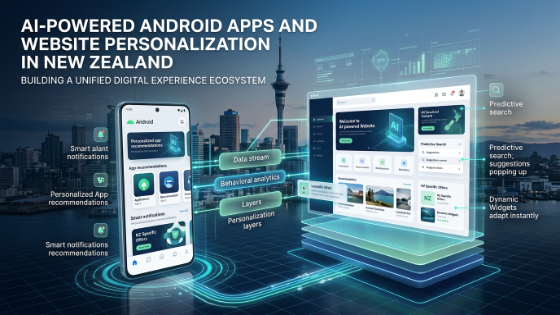
Why Are AI-Powered Android Apps Changing Customer Expectations in New Zealand?
AI-powered Android apps are changing customer expectations in New Zealand because users now demand instant, personalized, and intelligent mobile experiences instead of static app interfaces.
Users today expect:
- real-time recommendations
- predictive search results
- smart notifications based on behavior
- adaptive user interfaces
- personalized content feeds
These expectations are directly shaped by advancements in AI website personalization services, which allow businesses to study user behavior and respond in real time across platforms.
According to Statista, mobile apps account for more than 50% of global digital media usage time, which explains why businesses are focusing heavily on mobile-first AI experiences.
This shift means Android apps are no longer standalone tools. They are becoming part of larger AI-driven ecosystems that include websites, automation systems, and customer intelligence platforms.
How Do AI Website Personalization Services Create Smarter Digital Experiences?
AI website personalization services create smarter digital experiences by analyzing user behavior and automatically adjusting content, layout, and recommendations in real time.
The system works by tracking:
- browsing patterns
- click behavior
- time spent on pages
- product interactions
- location and device signals
Then it builds a personalized experience for each user.
This includes:
- dynamic homepage content
- personalized product recommendations
- smart call-to-action adjustments
- behavioral content targeting
- automated user journey optimization
McKinsey reports that companies using advanced personalization strategies can increase revenue by 5% to 15% and improve marketing efficiency significantly.
This is why businesses in New Zealand are rapidly adopting AI-driven website optimization services to improve engagement and conversion rates.
Why Should Businesses Connect Android Apps and Websites Using AI Systems?
Businesses should connect Android apps and websites using AI systems because customers move across both platforms during their journey and expect consistent personalization everywhere.
Without integration, user experience becomes fragmented. With AI integration, it becomes unified.
A connected system allows:
- shared user profiles across platforms
- consistent personalization logic
- real-time behavior tracking
- unified customer journeys
- improved retention rates
For example, if a user explores a product on a website, the Android app can later show personalized updates, offers, or reminders based on that behavior.
This is where AI website personalization services become essential. They act as the central intelligence layer connecting both platforms.
According to Gartner, organizations that invest in customer experience technologies outperform competitors significantly in retention and engagement metrics
This shows that unified AI ecosystems are becoming a competitive advantage rather than just a feature.
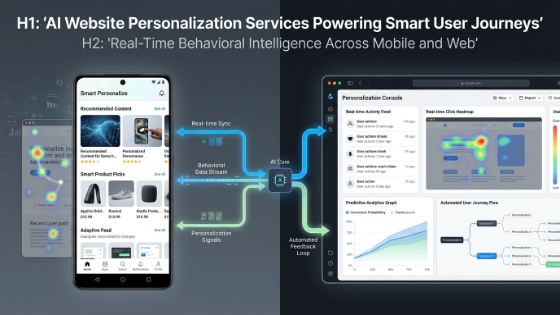
Why Do Businesses Struggle Without AI Website Personalization Services?
Businesses struggle without AI website personalization services because they are forced to deliver the same experience to every user, regardless of behavior or intent.
This creates several issues:
- low engagement rates
- high bounce rates
- weak conversion performance
- irrelevant content delivery
- poor customer retention
Users expect personalization. Without it, they lose interest quickly.
According to Semrush, personalized user experiences significantly increase engagement and improve conversion rates across digital platforms.
This explains why companies using AI-driven website optimization services are gaining a strong competitive advantage in digital markets like New Zealand.
How Do AI-Powered Android Apps Improve User Engagement and Retention?
AI-powered Android apps improve engagement and retention by learning user behavior and responding with personalized actions in real time.
They improve performance through:
- behavior-based notifications
- predictive content recommendations
- adaptive interface design
- personalized user journeys
- real-time engagement triggers
These features make users feel understood and valued, which increases interaction frequency and session time.
In simple terms, better personalization leads to stronger user loyalty.
This is directly powered by AI website personalization services, which continuously analyze data and improve experiences across both web and mobile platforms.
According to Statista, global mobile app revenue is expected to exceed $613 billion by 2025, showing how important mobile engagement has become for businesses worldwide.
Why Is New Zealand Rapidly Adopting AI-Driven Personalization Systems?
New Zealand is rapidly adopting AI-driven personalization systems because businesses are under pressure to improve digital experiences and compete with global platforms.
Customers in New Zealand now expect:
- faster websites
- smarter mobile apps
- personalized recommendations
- seamless cross-platform experiences
Small and medium businesses are also investing in AI-driven website optimization services because these systems help improve conversion rates without increasing marketing costs.
Another reason is accessibility. Modern AI systems can now be integrated into Android apps and websites without requiring large-scale infrastructure changes.
This reduces:
- development time
- operational cost
- implementation complexity
As a result, AI adoption is accelerating across industries like ecommerce, SaaS, and service-based businesses.
What Does the Future of AI-Powered Android Apps and Web Personalization Look Like?
The future of AI-powered Android apps and web personalization is fully unified, where both platforms operate as one intelligent ecosystem.
Instead of separate systems, businesses will use shared intelligence layers that manage:
- customer data
- behavioral insights
- personalization logic
- automation workflows
- recommendation engines
This will allow businesses to deliver continuous user journeys across all devices.
According to industry research, AI-driven personalization will become a standard expectation across digital platforms within the next few years as customer expectations continue to evolve.
This makes AI website personalization services a core requirement rather than an optional upgrade.
How Can Businesses Effectively Implement AI Personalization?
Businesses can start implementing AI personalization effectively by adopting a structured approach rather than trying to deploy everything at once.
A simple roadmap includes:
- collecting user behavior data
- integrating personalization engines
- connecting mobile and web systems
- deploying recommendation models
- optimizing user journeys continuously
Over time, this creates a fully adaptive digital ecosystem.
The key is consistency. AI personalization improves with time as more behavioral data is collected.
This is why AI-driven website optimization services play a critical role in long-term digital growth strategies.
Why Should Businesses Choose ZTS Infotech Pvt Ltd for AI-Powered Development?
ZTS Infotech Pvt Ltd helps businesses build scalable digital ecosystems that combine Android apps and websites into one intelligent system.
Their expertise includes:
- AI website personalization services
- AI-driven website optimization services
- Android app development with AI integration
- intelligent automation systems
- scalable web engineering solutions
- cross-platform user experience design
Instead of building isolated applications, they focus on unified AI-powered ecosystems that improve engagement, retention, and conversion rates.
For businesses in New Zealand, this approach supports long-term digital transformation and sustainable growth.
Frequently Asked Questions (FAQ)
What are AI website personalization services?
They are systems that customize website content and user experience based on user behavior, preferences, and real-time data.
How do AI-powered Android apps work?
They use behavioral data and machine learning models to deliver personalized experiences, recommendations, and notifications.
Why is personalization important for businesses in New Zealand?
It improves customer engagement, increases conversions, and helps businesses compete in a digital-first economy.
What are AI-driven website optimization services?
They are services that use AI to improve website performance, user experience, and conversion rates through data analysis and automation.
Can Android apps and websites share the same AI system?
Yes, modern systems allow both platforms to use shared personalization engines and unified customer data.
Are AI personalization systems expensive to implement?
Costs vary, but they often reduce long-term marketing and customer acquisition costs by improving retention and engagement.
Why should businesses invest in AI personalization now?
Because customer expectations are rising quickly, early adopters gain a strong competitive advantage in digital markets.
Conclusion
AI-powered Android apps and AI website personalization services are no longer optional for businesses in New Zealand. They are becoming the core of modern digital experiences. Companies that connect mobile and web systems into one intelligent ecosystem will see stronger engagement, better retention, and higher conversions over time.
The real shift is simple. Businesses are moving from static digital platforms to adaptive, behavior-driven systems. And those who adopt early will stay ahead in an increasingly competitive AI-first market.
For long-term growth, the focus should be on building unified, scalable, and data-driven experiences that work across every user touchpoint.
-

Writen by Anirban Das