USA:
USA:  India:
 If you are evaluating agencies, the real risk is not choosing the wrong one. It is choosing based on the wrong criteria.
Most businesses follow a predictable path when they begin searching for an AI web design agency in Canada.
They compare pricing structures, review design portfolios, and ask about timelines, assuming that these factors will help them make a confident decision.
On the surface, this approach appears logical and structured.
However, this is also where many decisions start to break down.
Because in reality, two agencies can present similar pricing, similar timelines, and equally impressive visual designs, yet deliver completely different outcomes once the website is live and interacting with real users.
The difference is not visible in proposals or presentations.
It becomes clear only when the website is expected to perform, convert, and scale.
This is why the quality of your decision depends less on what you compare and more on the questions you ask before you commit.
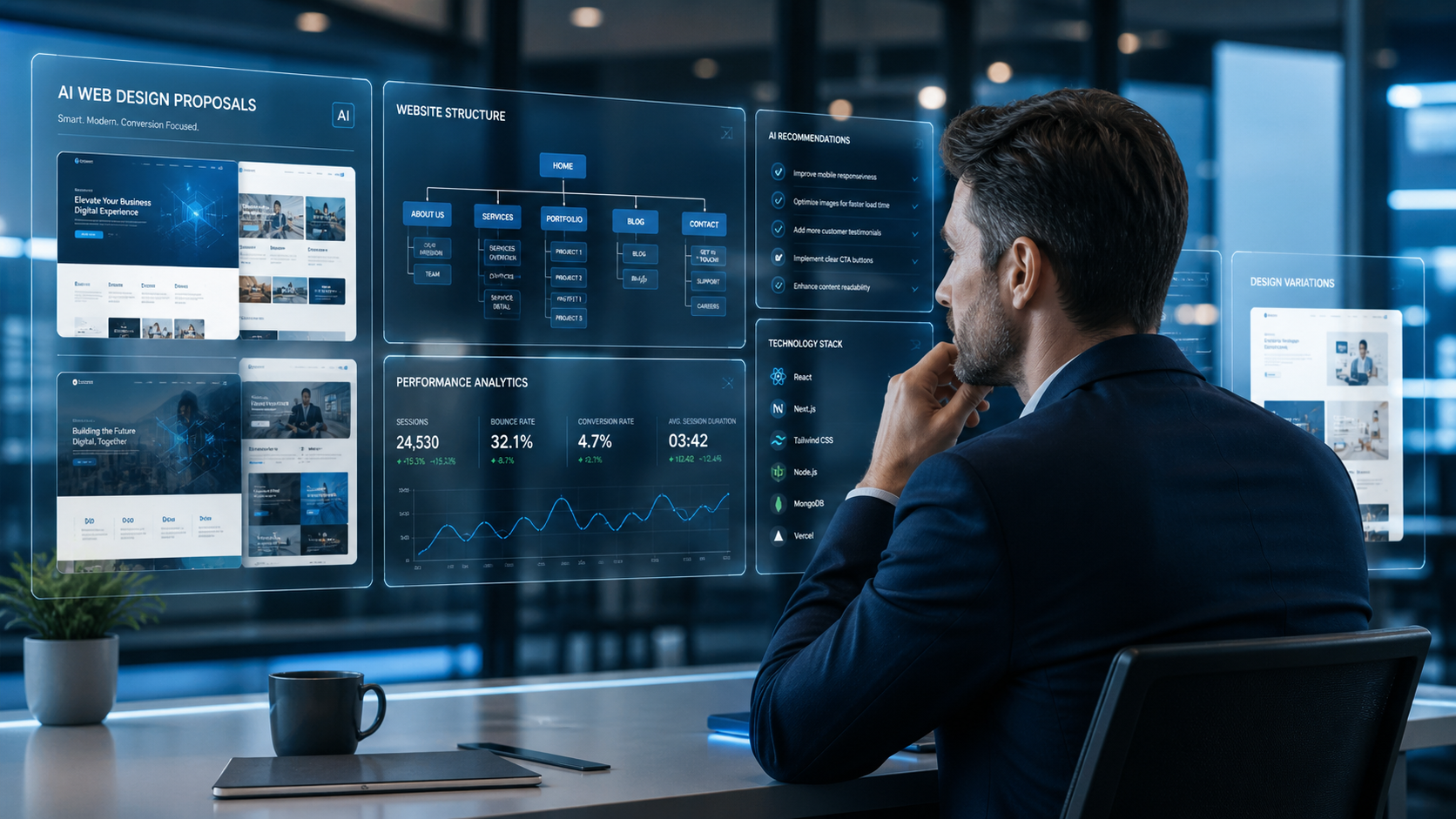
This is not a checklist. It is a decision framework.
Most blogs will give you a list of questions.
This is not one of them.
The questions below are designed to help you understand how an agency actually thinks, builds, and supports your website over time.
Because an AI-powered website is not just a design asset.
It directly affects how users interact with your business, how efficiently leads are generated, and how well your system supports growth.
Quick clarity before you go further
An AI web design agency is not simply responsible for how your website looks.
It influences:
- how users navigate and make decisions
- how interactions are handled in real time
- how processes are automated
- how performance improves over time
This means your decision is not about selecting a vendor.
It is about selecting a long-term system that will either support or limit your business outcomes.
The 7 questions that reveal how an agency really works
Each of the following questions is designed to move beyond surface-level answers and help you identify whether the agency is building for performance or just presentation.
1. How Do You Apply AI in Your Web Design Process, and Where Does It Actually Improve Results?
Many agencies include AI in their messaging, but the depth of implementation varies significantly.
Some rely on adding basic tools such as chat interfaces or pre-built plugins, which may create the impression of intelligence without fundamentally improving the system.
Others take a more structured approach, where AI is integrated into the user journey itself, influencing how visitors interact, make decisions, and move forward.
A strong answer will not focus on tools alone. It will explain how AI contributes to measurable improvements, such as reducing friction, guiding user behaviour, and improving engagement over time.
If the explanation feels generic or overly technical without clear outcomes, it often indicates that AI is being used as an add-on rather than as part of a system.
2. How is the Website Designed to Perform As Traffic and Business Demands Increase?
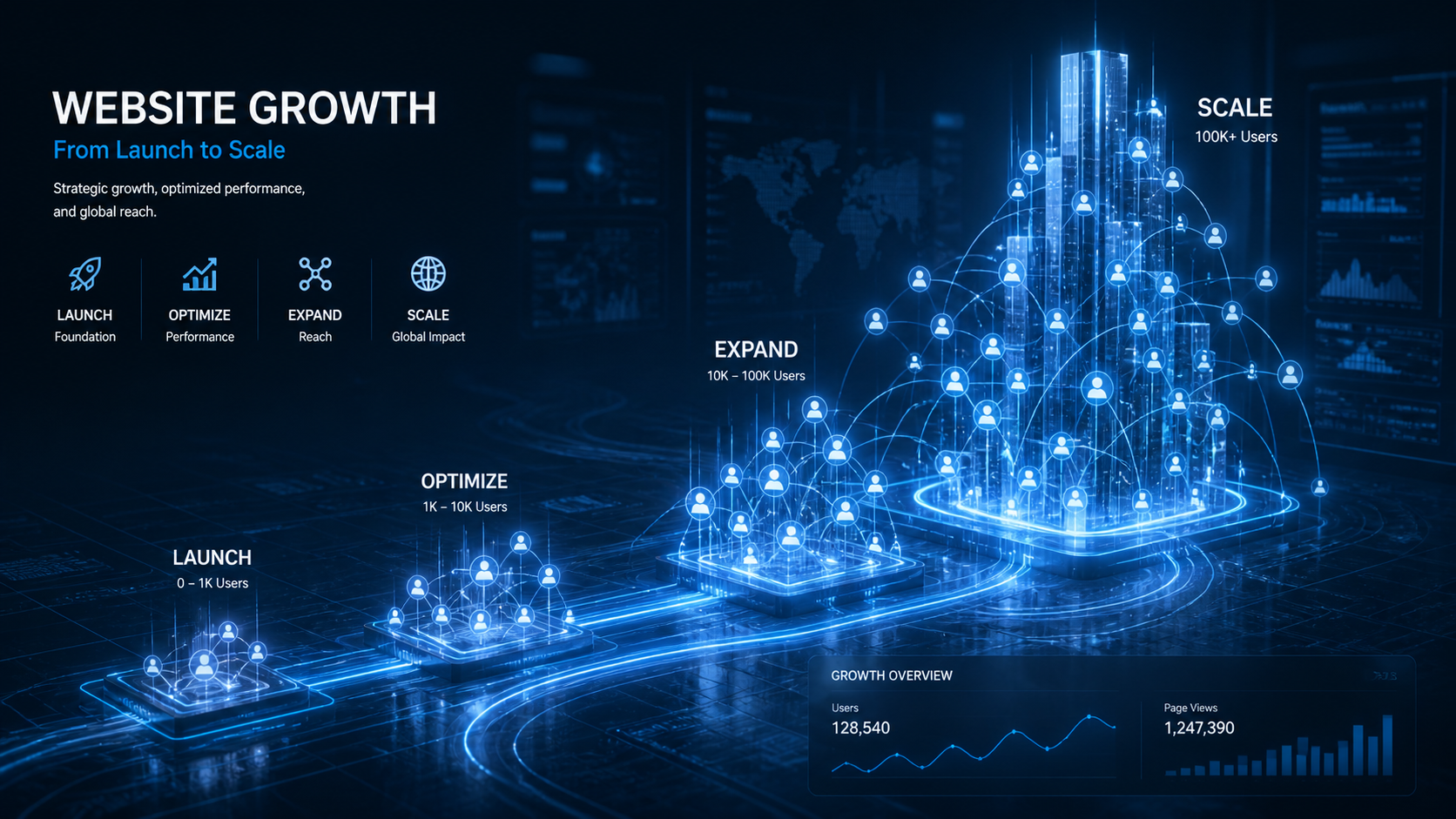
Scalability is rarely discussed in depth during early conversations, yet it becomes one of the most important factors after launch.
A website that performs well with limited traffic may struggle as user volume grows, especially if the underlying structure was not designed with flexibility in mind.
A reliable agency should be able to explain how the system will handle increased traffic, how easily new features can be introduced, and whether the architecture supports long-term expansion without requiring a complete rebuild.
When scalability is not clearly addressed, it often leads to performance issues that only appear when the business begins to grow.
3. How Do You Measure Success Beyond Visual Design?
A well-designed interface can create a positive first impression, but it does not guarantee business results.
The real measure of success lies in how effectively the website guides users, supports interactions, and converts interest into action.
An agency that focuses on performance will talk about metrics such as conversion rates, engagement levels, interaction flow, and response efficiency.
If success is defined primarily in terms of design aesthetics, it usually means that performance has not been fully considered in the development process.
4. What Level of Automation is Included, and How Does It Improve Efficiency?
Automation is one of the core advantages of AI-driven systems, but its implementation needs to be purposeful and well-structured.
A strong agency will explain how automation supports processes such as lead capture, user responses, and workflow management, ensuring that the system operates efficiently without unnecessary manual intervention.
At the same time, automation should simplify operations rather than introduce complexity.
If the explanation is unclear or overly focused on features rather than outcomes, it may indicate that automation has not been integrated strategically.
5. What are the Long-Term Costs I Should Realistically Expect After Launch?
One of the most common gaps in decision-making is the focus on initial pricing without considering ongoing costs.
AI-driven systems often involve additional expenses such as API usage, infrastructure, hosting, maintenance, and continuous optimization.
A transparent agency will provide a clear overview of these costs and help you understand how they may evolve as your website grows.
If pricing discussions remain limited to the initial build, it creates a risk of unexpected expenses later.
6. What Does Your Development Process Look Like from Strategy to Post-Launch Optimization?
A structured development process is one of the strongest indicators of reliability and consistency.
You should expect a clear explanation that covers discovery, strategic planning, design, development, testing, launch, and ongoing optimization.
This structure ensures that every stage of the project is aligned with business objectives and that the system is built with clarity and purpose.
When the process feels undefined or overly simplified, it often leads to inconsistent outcomes and avoidable delays.
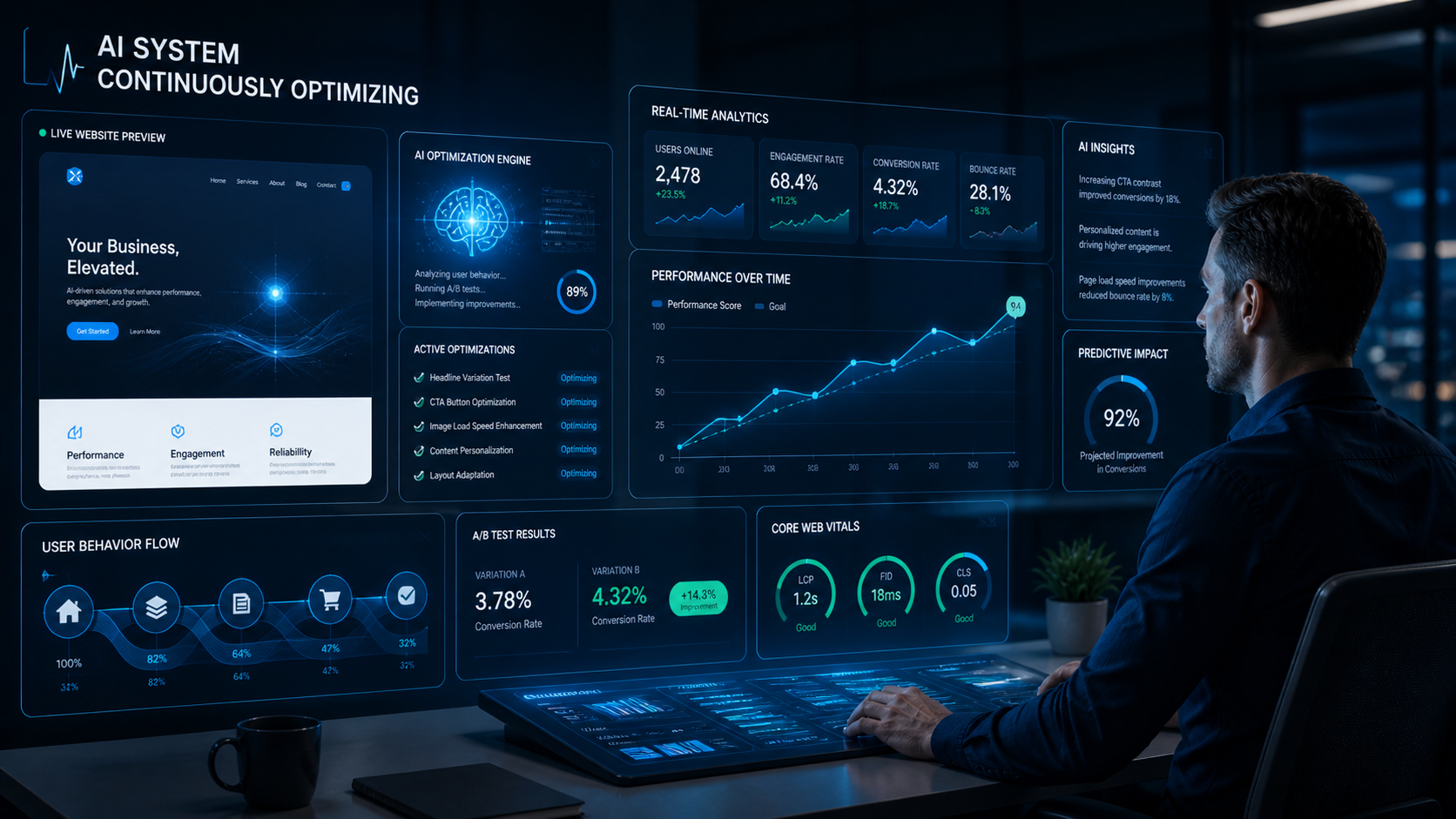
7. What Happens After the Website Goes Live, and How is Performance Improved Over Time?
The launch of a website is not the end of the process. It is the beginning of real-world performance.
User behaviour changes, market conditions evolve, and new opportunities emerge over time.
A strong agency will provide ongoing support, monitor performance, and continuously refine the system based on real data.
If post-launch support is limited or unclear, it usually means the website will remain static, which reduces its effectiveness over time.
A simple way to evaluate your conversations
After asking these questions, the difference between agencies becomes easier to identify.
You should come away with:
- clear explanations rather than vague assurances
- structured thinking rather than assumptions
- confidence based on logic rather than promises
If these elements are missing, it often indicates that the system behind the website may not be strong enough to support long-term performance.
What High-Performing Businesses Focus on Instead
Businesses that achieve better results approach this decision differently.
They do not prioritize:
- the lowest cost
- the fastest delivery
- the most visually impressive design
Instead, they focus on:
- long-term performance
- system reliability
- scalability
- continuous improvement
Because they understand that a website is not just an expense, but a core part of how the business operates and grows.
Where Many Agencies Fall Short
A common pattern across the market is an overemphasis on design and short-term delivery.
This often results in:
- systems that are not built to scale
- limited automation capabilities
- lack of long-term strategy
Over time, these limitations lead to inconsistent performance and the need for repeated redevelopment, which increases overall cost and complexity.
A More Practical Way to Approach Your Decision
Instead of focusing only on what the website will look like at launch, it is more useful to consider how it will perform over the next one to two years.
This shift in perspective changes the type of questions you ask and the quality of the answers you expect.
It also helps you choose an agency that is aligned with your business goals rather than just your immediate requirements.
How ZTS Infotech Pvt Ltd Approaches This Differently
ZTS Infotech Pvt Ltd approaches AI web design with a clear emphasis on structure, performance, and long-term value.
Rather than focusing only on visual output, the approach is built around creating systems that function reliably and scale efficiently as business needs evolve.
This is supported by:
- over 15 years of experience in web development and digital solutions
- a portfolio of more than 350 global clients
- ISO 9001 and ISO 27001 certified processes
- experience working across multiple industries and markets
The focus remains on:
- building strong technical foundations
- applying AI where it delivers measurable improvements
- maintaining clarity and scalability throughout the process
You can explore the approach in more detail here:
https://ztsindia.com/service/ai-website-engineering-canada
Final Insight
Choosing an AI web design agency is not about selecting the most advanced tools or the most attractive design.
It is about understanding the structure behind the system that will support your business over time.
The right questions do more than help you choose an agency.
They help you avoid decisions that may limit your growth later.
Before You Move Forward
Instead of rushing into a selection, it is more useful to step back and evaluate whether your current website is actually supporting your business goals or simply maintaining an online presence.
Look at what is happening beneath the surface.
Are users taking action, or just visiting and leaving?
Is your system helping you scale, or creating limitations as you grow?
These are the signals that matter when deciding your next move.
If you want a clearer, more structured understanding of where your website stands and what it needs next, a guided assessment can help you avoid unnecessary rework and make more confident decisions.
You can explore how a structured, performance-driven approach works here:
https://ztsindia.com/service/ai-website-engineering-canada
At this stage, the focus should not be on making quick changes.
It should be on building a system that is designed to perform reliably, evolve with your business, and deliver consistent results over time.
-

Writen by Anirban Das