USA:
 India:
The safest and most useful AI agents for traders handle the routine work around trading: morning briefings, trade journals, limit alerts and records. They don’t decide or place trades. Build them with read-only broker access, test them on paper trading, and log everything they do.
Key takeaways
Start with agents that support the trader, not agents that trade
Four high-value agents: morning briefing, trade journal, limits watcher, records clerk
FINRA’s 2026 observations point to clear scope limits, supervision and strong logging for AI agents
Read-only access and paper trading are the safe defaults for building and demos
Why not start with a trading bot?
A bot that buys and sells carries the most risk: wrong trades, unclear liability and regulatory questions. In January 2026, FINRA described risks such as agents acting beyond the authority a user intended, decisions that are hard to audit, and prompt injection from outside content. US lawmakers also asked for information on agentic trading in June 2026. Support work avoids most of that while still saving real time.
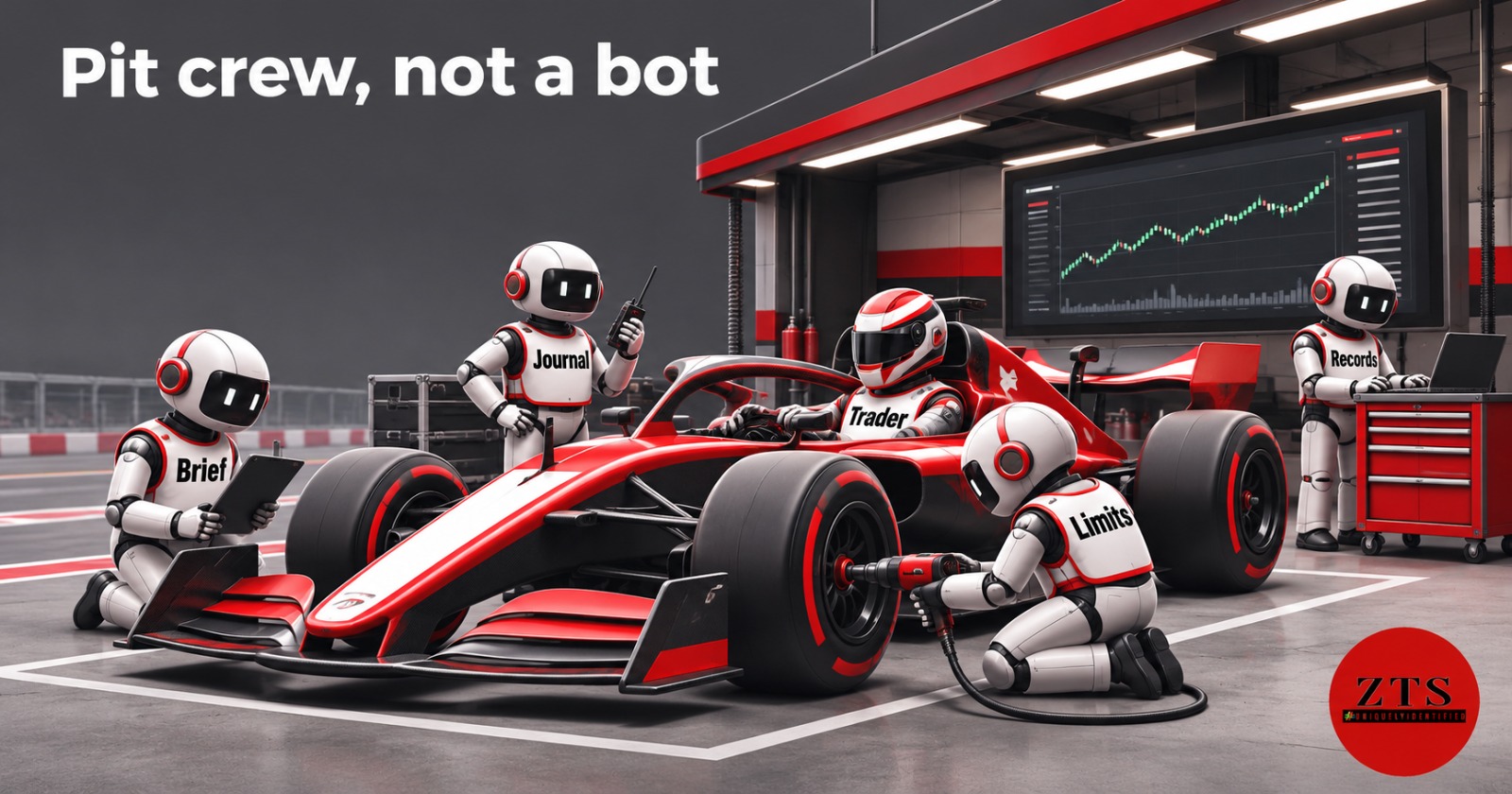
Think of a Formula 1 team. The driver drives. The pit crew handles tyres, data and radio so the driver can focus on the race. Trading agents should work the same way.
Four agents worth building
Take a small trading desk in New York.
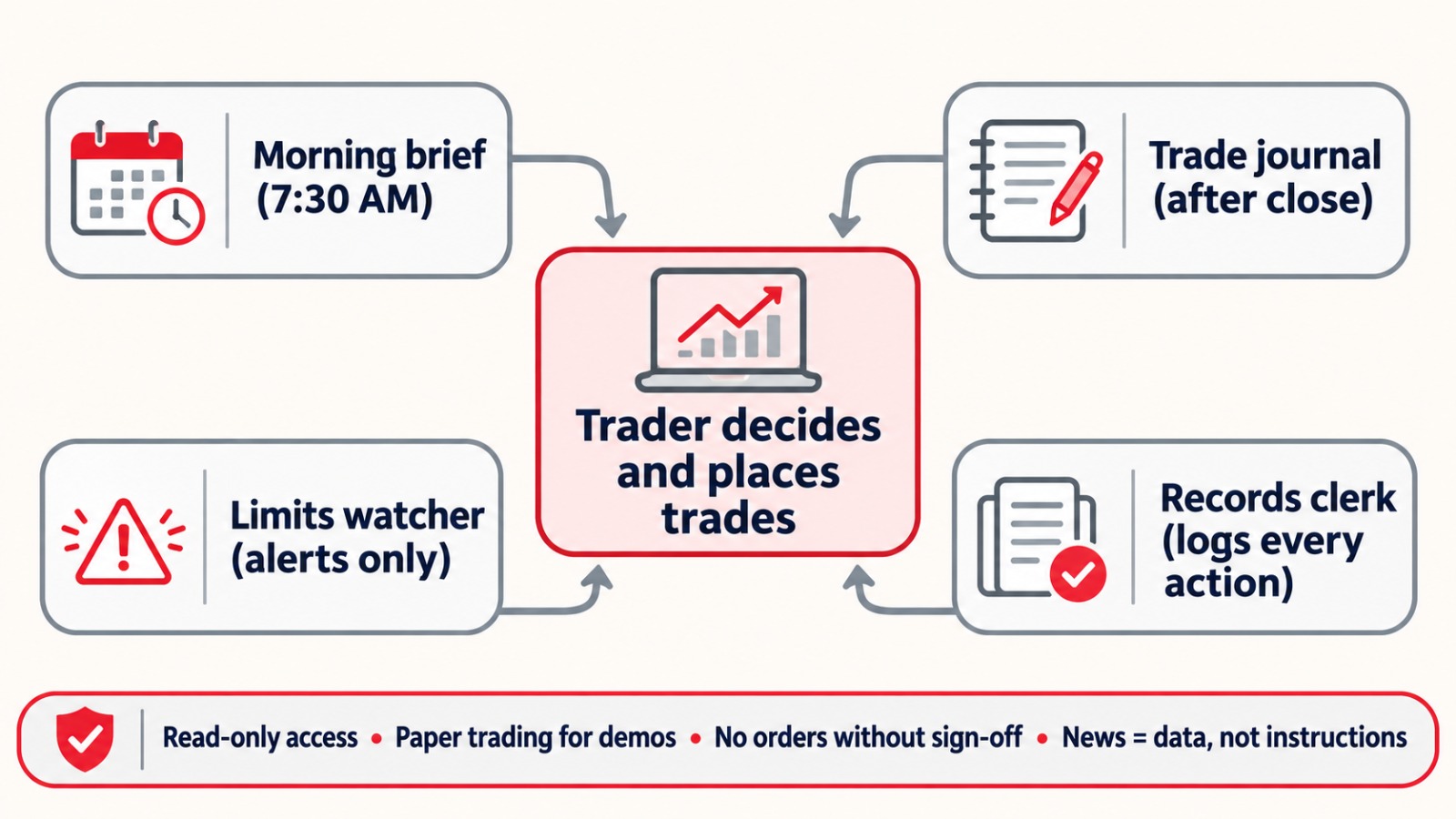
The morning briefing agent runs at 7:30 AM. It reads overnight news, the earnings calendar and moves in the trader’s watchlist, then writes a one-page brief.
The trade journal agent runs after the close. It records the day’s fills and positions with the trader’s notes. On Fridays it adds a factual summary, such as results by time of day, and leaves the interpretation to the trader.
The limits watcher alerts the trader when position size or daily loss approaches limits they’ve set themselves. It has no permission to place orders.
The records clerk keeps a full log of every agent action for compliance review.
How to build them safely
Use read-only API keys with the broker wherever possible.
Build and demo on paper trading. Alpaca’s official MCP server, which works with Claude, Cursor and Gemini CLI, defaults to paper mode.
Grant order permissions only with written sign-off from the firm, and keep a human approval step.
Treat news and other outside text as data, never as instructions, to reduce prompt-injection risk.
Keep complete logs of what each agent read and did.
For regulated firms, involve the compliance team from the first design meeting.
Frequently asked questions
Trending question: Is it legal to use AI to help with stock trading?
Using AI tools for research, journaling and alerts is generally allowed, but market rules still apply and regulated firms have supervision duties. This is general information, not legal advice, so check with a compliance professional.
Trending question: Can an AI agent trade stocks for me?
Technically yes, through broker APIs, but it’s the riskiest use. We recommend agents that prepare information and alert you, while you make and place every trade.
Do these agents give investment advice?
No. They gather data, summarise facts and send alerts. Decisions stay with the trader.
What should a trading firm ask an AI agent vendor?
Ask what access each agent has, whether it can place orders, how actions are logged, and how it handles untrusted content such as news.
-

Writen by Anirban Das