USA:
USA:  India:
 The competitive landscape for frontier AI just got more crowded, and more complicated. Alibaba has launched Qwen 2.5-Max, a frontier-grade model the company is positioning as a direct challenger to GPT-4o and Claude 3.5 — two of the systems Western enterprises have treated as the default choice for serious AI work. The headline claim isn’t just capability. It’s capability at a fraction of the price, delivered by a company that has spent years building one of the largest open source AI ecosystems in the world.
For business leaders evaluating AI vendors, this isn’t a story to file away as “interesting international news.” It’s a direct signal that the assumption underlying a lot of AI budgeting — that frontier-grade performance requires a premium US-lab contract — no longer holds as cleanly as it did a year ago.
What Qwen 2.5-Max Actually Does
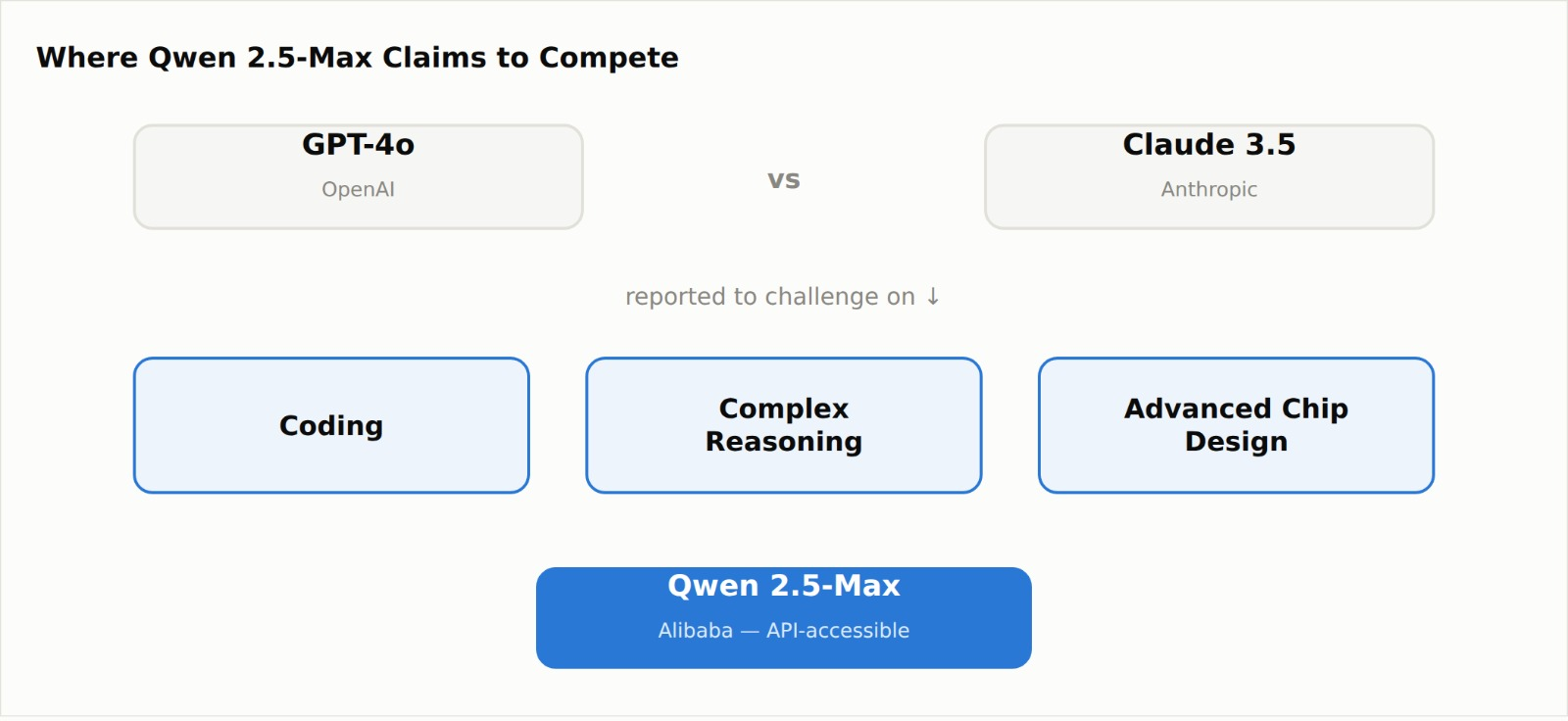
According to ZTS Infotech’s AI News Desk, Qwen 2.5-Max is Alibaba’s Max-tier model, sitting at the top of the company’s Qwen family and accessible via API. Alibaba has built its reputation largely on open-source releases, but the Max tier is positioned differently: a commercial, frontier-grade offering aimed squarely at the same enterprise workloads GPT-4o and Claude 3.5 compete for. The reported strengths are concentrated in three areas that matter most for real engineering and R&D work: coding, complex reasoning, and advanced chip-design tasks — the kind of specialized, high-difficulty work that has typically been used to argue for premium-tier US models.
Demonstrating credible performance in chip design specifically is notable, since it’s a domain requiring precise, technically dense reasoning rather than general purpose fluency.
The Price Disruption
The performance claim is what generates headlines, but the pricing is what will actually move procurement decisions. Qwen 2.5-Max is being offered at a fraction of the cost of its Western competitors, according to the video’s reporting. For any organization running AI workloads at volume — batch code review, large-scale document analysis, iterative reasoning chains — the per-request cost difference compounds quickly across a monthly bill.
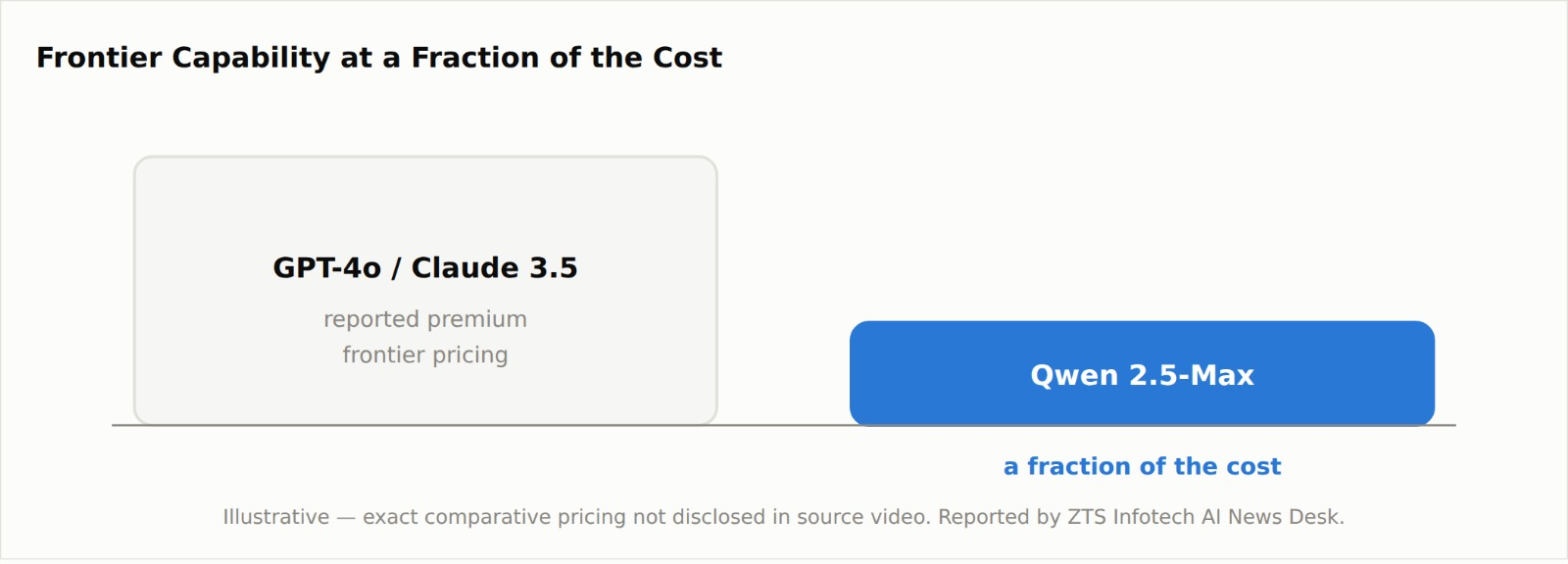
That combination of competitive capability and a materially lower price point is precisely the pressure point that reshapes vendor negotiations, even for companies with no intention of actually switching providers.
The Geopolitical Reality Check
Here’s where the story moves beyond a typical product launch. As global developers increasingly rely on highly capable, affordably priced Chinese AI infrastructure, the center of gravity in the AI race shifts in a way that isn’t purely technical. It becomes a question of which nation’s infrastructure the world’s software runs on by default. That’s a meaningfully different conversation than “which model scores higher on a benchmark,” and it’s one that enterprise buyers, particularly those in regulated industries or with data-sovereignty obligations, will increasingly have to factor into vendor selection — independent of raw model quality.
Can US Labs Stay Ahead? The Recursive Self Improvement Question
The video’s framing poses the sharpest question directly: can US labs use their superior compute power for recursive self-improvement — using AI systems to accelerate the development of better AI systems — to maintain a durable lead? Or is high-level intelligence becoming commoditized faster than that compute advantage can compound? Neither answer is settled.
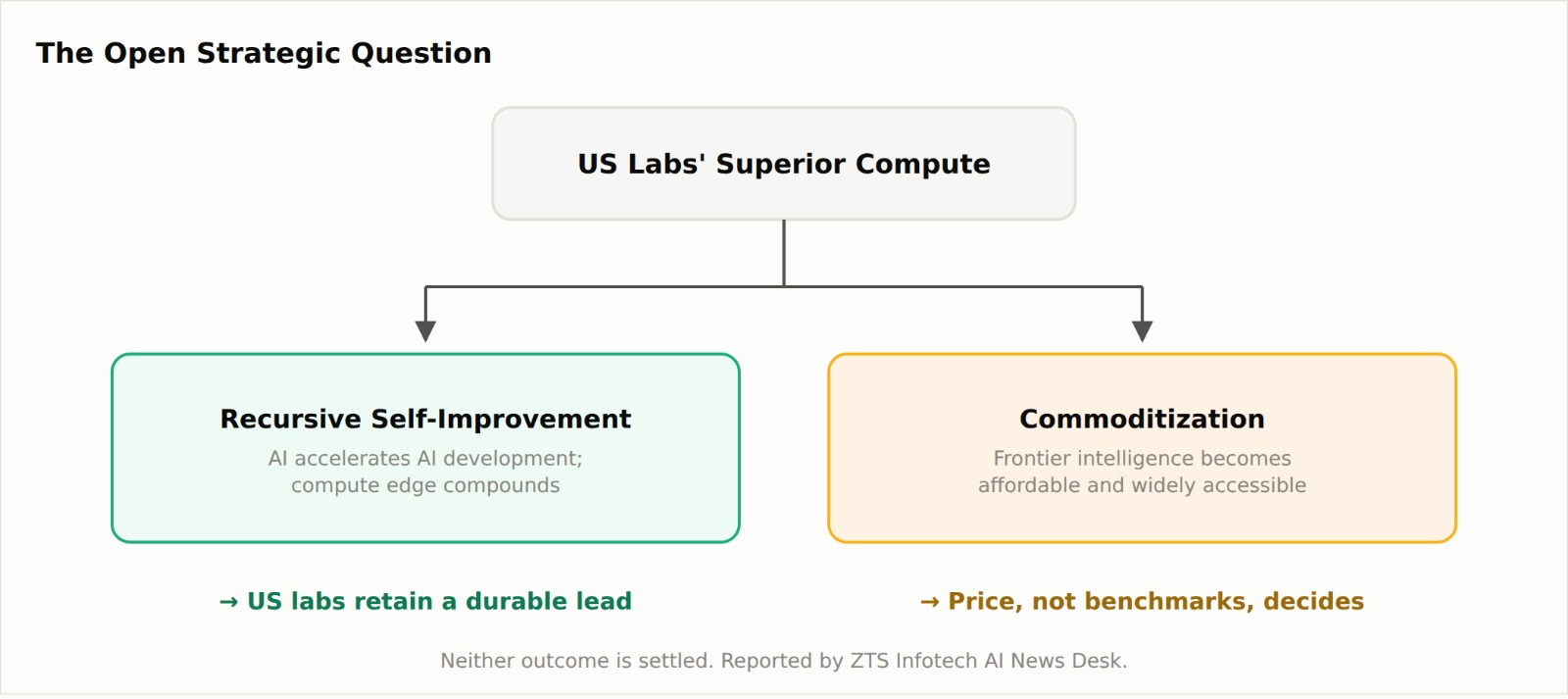
Compute advantage is real and significant, but Qwen 2.5-Max is evidence that the gap between “frontier” and “commodity” AI has narrowed enough that raw compute superiority alone may not guarantee a lasting edge. That’s an open strategic question, not a resolved one — and it’s worth watching rather than assuming either direction.
Bottom line for buyers: A credible, lower-cost frontier alternative now exists. That doesn't mean switching vendors — it means the premium-price assumption deserves a second look at your next contract renewal.
What This Means for Businesses Evaluating AI Vendors
Procurement conversations that once defaulted to a short list of US labs now have a legitimate, lower-cost alternative worth a line item in the evaluation, even if only as leverage. The practical takeaway isn’t “switch vendors” — it’s “stop assuming there’s no credible alternative.” Teams with genuinely price-sensitive, high-volume AI workloads have a new option to pilot; teams with data-sovereignty or compliance constraints have a new factor to weigh explicitly rather than assume away.
Expert Perspective
What makes this moment different from prior “China catches up” AI stories is the combination of claims: not just competitive benchmarks, but competitive benchmarks at a fraction of the cost, from a company with genuine open source credibility behind it. That combination is harder to dismiss than a single impressive demo. The strategic question for US labs isn’t whether they can build a better model next quarter — they likely can. It’s whether “better” remains commercially decisive when “good enough, dramatically cheaper” is sitting right next to it in the vendor list. Expect pricing, not just benchmark leadership, to become a more central axis of competition among frontier labs over the next year, and expect enterprise buyers to start asking vendors to justify premium pricing in terms a CFO can defend, not just a research team.
Key Takeaways
- Alibaba’s Qwen 2.5-Max is a frontier-grade, API-accessible model positioned against GPT-4o and Claude 3.5.
- Reported strengths concentrate in coding, complex reasoning, and advanced chip-design tasks.
- It’s priced at a fraction of the cost of Western frontier competitors.
- Growing reliance on affordable Chinese AI infrastructure carries geopolitical, not just technical, implications.
- The open strategic question: can US labs’ compute advantage sustain a lead through recursive self-improvement, or is frontier intelligence becoming commoditized?
- Enterprise buyers now have a credible lower-cost alternative worth factoring into vendor evaluations.
- Data-sovereignty and compliance considerations matter independently of raw model quality.
Conclusion
Qwen 2.5-Max isn’t just another model launch — it’s a marker of how quickly the frontier AI market is being reshaped by price as much as by performance. Whether
US labs can convert their compute advantage into a durable technical lead, or whether high-level AI capability continues drifting toward commodity pricing, remains an open question worth watching closely over the coming months. ZTS Infotech’s AI News Desk will keep tracking how this competitive pressure plays out — for now, the practical lesson for any business buying AI services is simple: the premium-price assumption no longer goes unquestioned.
-

Writen by Anirban Das