USA:
USA:  India: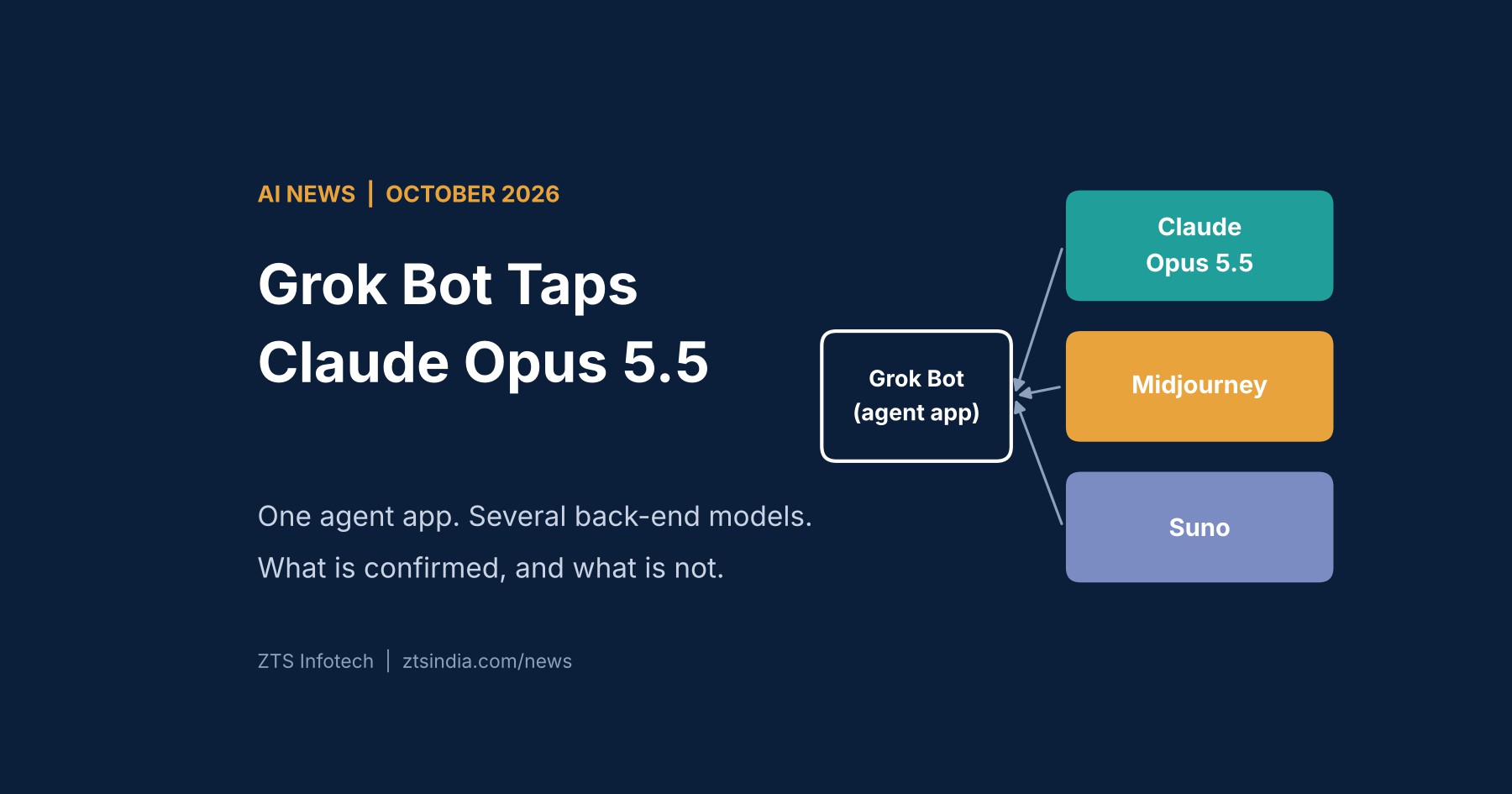
On October 7, Elon Musk said something few in the industry expected. Grok Bot, the agent app from SpaceX's AI business, will draw on Anthropic's Claude Opus 5.5 as one of its
back-end models. Musk wrote that the company will use the best model for any given task, and he named Midjourney and Suno alongside Claude.
For business leaders, the headline matters less than the architecture behind it. A product built by one AI lab is openly buying capability from a rival. That is a signal about how enterprise AI is being assembled, and it raises practical questions about cost, quality and data handling that every company using AI agents should ask now.
What was announced, and what was not
The facts are narrower than some headlines suggest. Musk's post named Claude Opus 5.5, Midjourney and Suno as back-end options. A Grok Bot staff member then added that all bots in the app will be powered by Opus 5.5, and that bots can start cloud agents running Cursor models.
Grok Bot is not the Grok chatbot
The distinction is easy to miss. The announcement covers Grok Bot, the agent app. It has not been confirmed for the Grok chatbot on X. Anyone briefing a board or a client should keep the two products apart, because the data exposure and the use cases are different.
The money moves in a circle
The commercial backdrop is unusual. Reports say Anthropic rents computing capacity from SpaceX's Colossus 1 data center to run Claude. Now SpaceX's own agent app is buying access to Claude. The supplier has become a customer.
One way to picture it: a restaurant that owns a farm still buys bread from the bakery down the street, because the bakery's bread is better. Owning infrastructure and using the best tool for a given job are separate decisions.
Routing, not retreat
It would be a mistake to read this as Grok conceding defeat. The more accurate reading is model routing: each task goes to the model that fits it best. Simple, high-volume work can go to a cheaper and faster model. Harder reasoning can go to a stronger and more expensive one.
The price gap shows why. On one third-party listing (OpenRouter), Grok 4.7 costs $2 per million input tokens and $6 per million output tokens. Claude Opus 5.5 is listed at $4 and $20. The same listing describes Grok 4.7 as faster. Prices change often, so confirm current rates with each provider's official pricing page before budgeting.
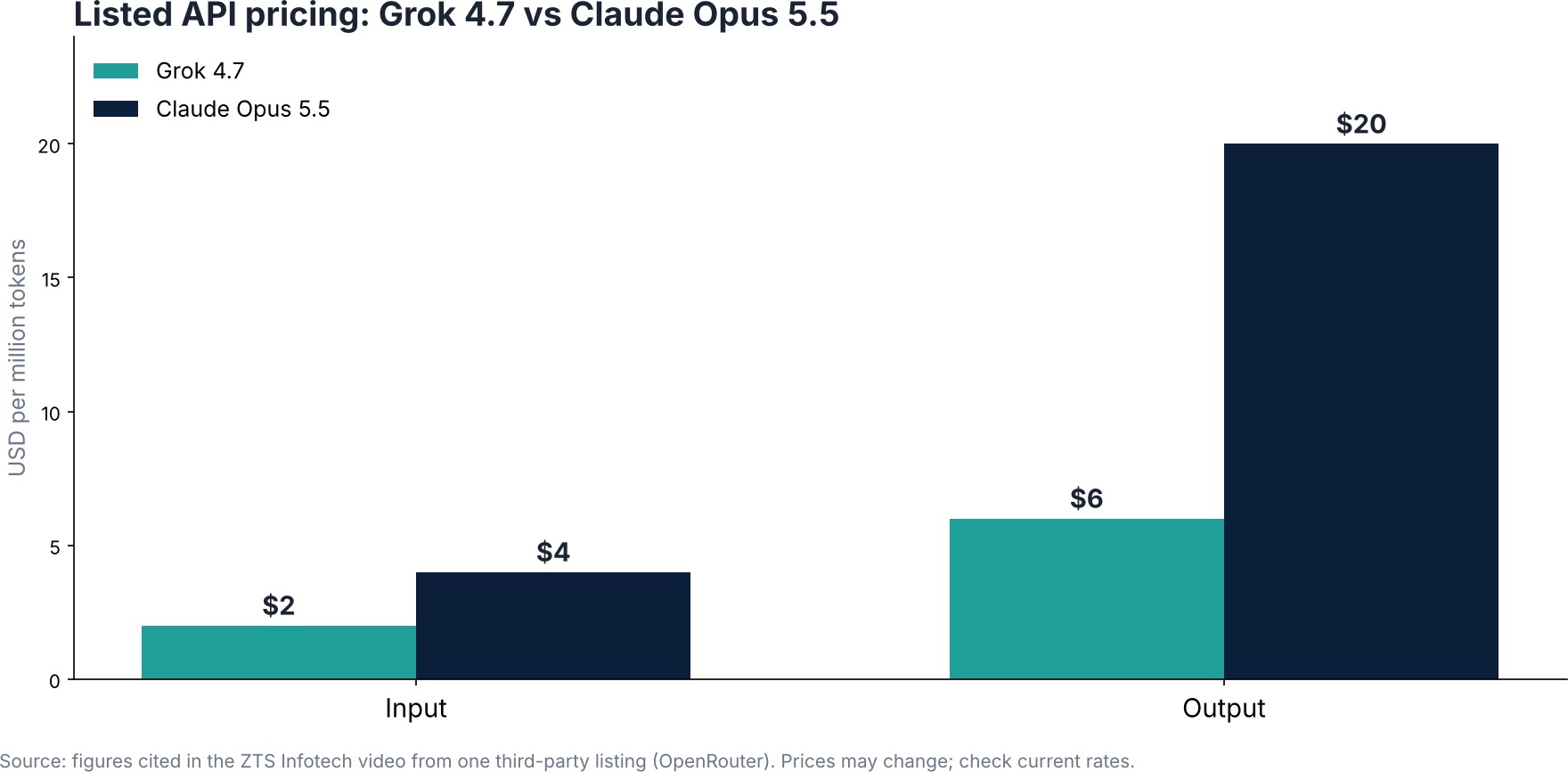
Figure 1: Listed API pricing per million tokens, as cited in the source video.
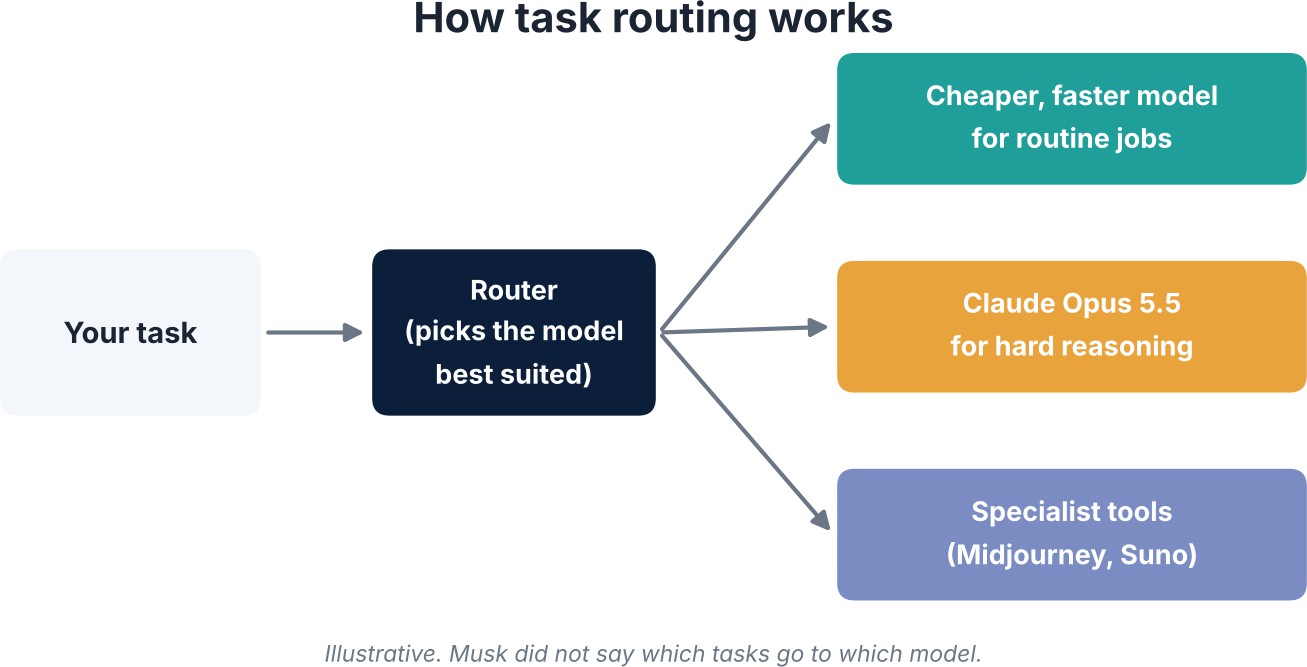
Figure 2: A simplified view of task routing. The actual task-to-model mapping has not been disclosed.
Three points still unconfirmed
Several details that matter to buyers are missing from the public record:
- Task allocation. Musk did not say which tasks go to which model.
- Cost sharing. There is no explanation of how costs are shared between the companies involved.
- Data movement. It is unclear how user data travels between the services.
There is also a timing detail worth handling carefully. The post came a day after some users reported problems accessing Grok. Nothing official links the two, and readers should not infer a connection.
Practical takeaways for decision makers
Treat the data path as an open question
If a client's pricing sheet, contract or customer list goes into a Grok Bot task, it may now pass through more than one company's model. Until the data path is explained, keep confidential client information out. Ask any agent vendor, in writing, which sub-processors touch your data.
Stop marrying one model
The larger lesson applies well beyond this announcement. Teams that hard-wire one model into their workflows carry avoidable cost and risk. A sensible pattern is to route easy jobs to a low-cost model and reserve the strongest model for complex ones.
Test before you move
ZTS Infotech is not changing any client workflow because of one post. The plan is to trial Grok Bot on non-sensitive tasks first and judge it on results.
Expert Perspective
Editorial analysis. The notable shift here is commercial rather than technical. When a platform owner chooses a competitor's model for its flagship agent, it suggests that the model layer is becoming interchangeable, and that value is moving to orchestration: deciding which model handles which job, at what cost, with what controls.
For the market, that favours buyers. Providers will find it harder to lock customers in on brand alone and will compete on price, speed and reliability for specific task types. It also raises the importance of governance. Every additional model in a chain is another party in your
data-protection analysis, and procurement teams will increasingly ask for routing transparency.
Looking ahead, expect multi-model agents to become the default rather than the exception. Companies that build routing logic, logging and data-classification rules now will be better placed than those that standardise on a single vendor.
Key Takeaways
- Musk said Grok Bot, the agent app, will use the best back-end model per task, naming Claude Opus 5.5, Midjourney and Suno.
- The claim covers Grok Bot only. It is not confirmed for the Grok chatbot on X.
- Anthropic reportedly rents compute from SpaceX's Colossus 1, so the supplier is now also a customer.
- This is model routing, not a retreat. Listed prices differ widely: $2/$6 for Grok 4.7 versus
$4/$20 for Opus 5.5 per million tokens.
- Task allocation, cost sharing and data movement remain unconfirmed.
- Keep confidential client data out of multi-model agents until the data path is explained.
- Route routine work to cheaper models and hard work to stronger ones.
What to watch next
The next useful disclosures will be practical ones: which tasks use which model, how data is handled between providers, and whether the arrangement extends beyond Grok Bot. Until then, test cautiously, protect sensitive information and keep your own workflows flexible. ZTS Infotech will continue to track verified developments in AI agents and report them here.
-

Writen by Anirban Das