USA:
USA:  India: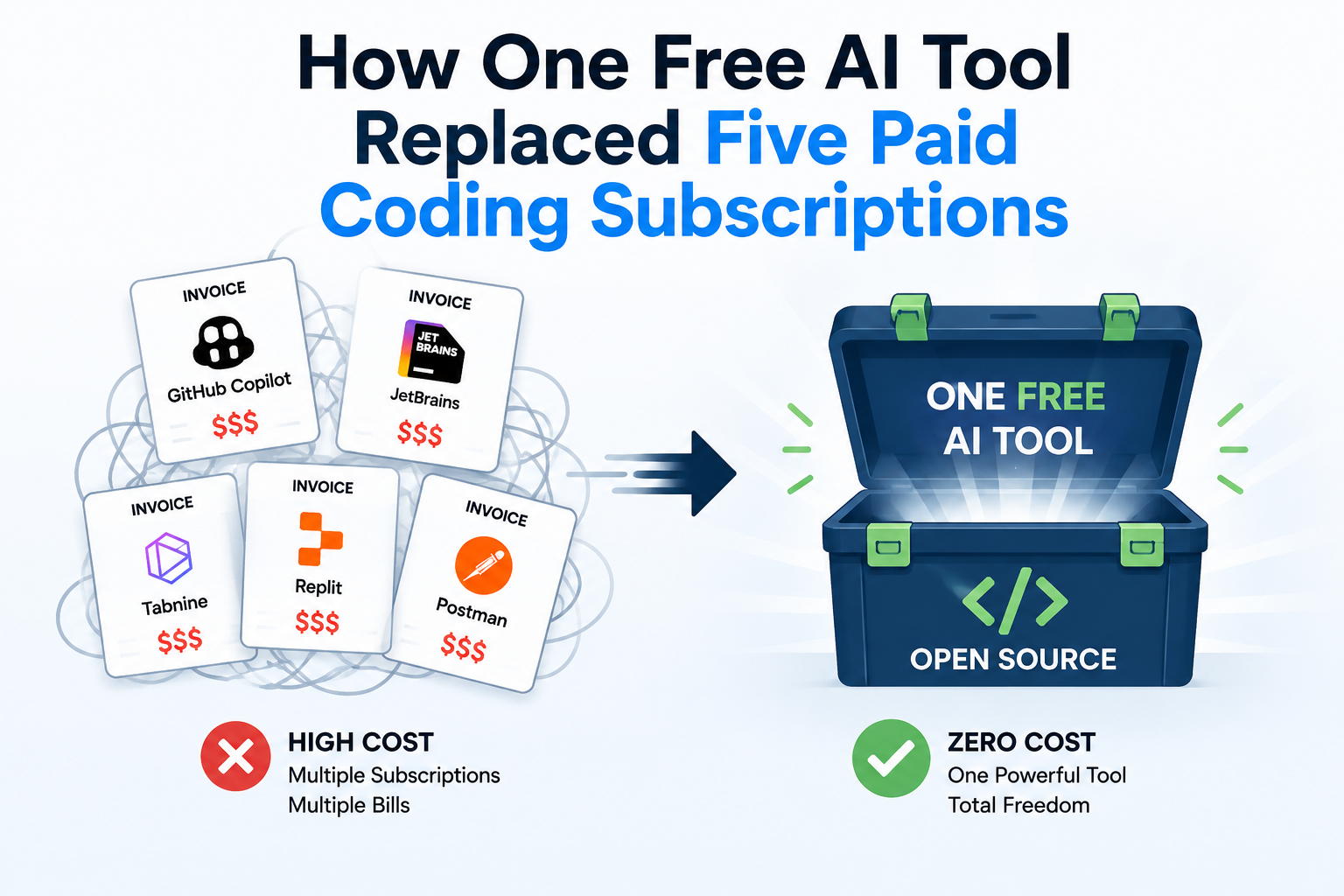
A client wanted an HR system it could own outright. Building it exposed a cost most software buyers never see — and a fix worth knowing about.
Software buyers rarely ask the question that matters most until it's too late: who actually owns what gets built? A client came to ZTS Infotech with exactly that concern. Their existing agency had delivered a human resources management system, or HRMS, built on a stack that required ongoing monthly payments simply to keep running. The client wanted out — a dedicated HRMS they could operate independently, with no recurring dependency on the agency that built it.
That request exposes a problem that rarely gets discussed publicly: what it actually costs a development team, in tools alone, to build something a client will fully own.
The Hidden Line Item: Five Subscriptions Before Shipping Anything
Before writing a line of the client's code, ZTS Infotech's development team was running five separate paid AI coding subscriptions in parallel — one for system architecture, another for code generation, a third for reading the existing codebase, a fourth for development cycles, and a fifth for orchestrating the workflow between them. Five monthly bills, incurred before a single feature reached the client.
That is the quiet cost baked into a lot of custom software work: agencies pass along tooling overhead clients never see itemised, and it rarely disappears once a project ships, because the same tools are needed for every future change.
Finding a Way Out: MonkeyCode
The team's answer was MonkeyCode, an open-source AI development platform built by Chaitin Tech that has passed 3,800 stars on GitHub. Its free tier includes 30 million tokens per day, resets daily, and requires no credit card. Unlike a single-purpose coding assistant, MonkeyCode manages development environments, AI models, and project requirements together — closer to an internal engineering platform than a chat tool.
How the Build Actually Worked
ZTS Infotech connected the client's private GitHub repository directly to MonkeyCode and described a specific requirement in plain English: build a leave management module with approval workflows. MonkeyCode read the entire existing codebase, worked out how the architecture fit together, wrote the module files, ran the tests, and opened a pull request. A senior developer reviewed it, approved it, and merged it in — the same review discipline any human-written code would go through.
Data Stayed Inside the Client's Network
The detail that matters most for any business evaluating this approach is deployment. MonkeyCode supports private, offline deployment inside a company's own network through Docker, meaning the client's codebase and data never left their environment during development. For an HR system holding employee records, that is not a minor technical footnote — it is the difference between a viable option and a non-starter for most compliance-conscious buyers.
On the model side, the coding work itself ran on free, openly available models — Kimi, GLM, Qwen, and DeepSeek — rather than a single proprietary subscription.
The Outcome
The client now operates a fully independent HRMS agent with no ongoing tie to the agency that built it and no monthly AI tooling cost quietly folded into their contract. For ZTS Infotech, the experience changed how it approaches a specific category of client request. It is now the team's recommended stack whenever a client's stated goal is ownership: build something the client controls completely, with no ongoing vendor dependency built into the product itself.
Expert Perspective: Why This Matters Beyond One HRMS Project
The broader story isn't really about a single tool. It's a shift in the economics of custom software delivery. "Vendor lock-in" has long been framed as a licensing or contract problem — clauses, renewal terms, exit costs. This case points to a quieter version of the same issue: lock-in baked into the tooling a development team relies on, invisible to the client because it never appears as a line item, only as a dependency they eventually discover they can't easily escape.
Open-source, self-hostable development tooling changes that calculation for both sides. Agencies cut their own operating cost by consolidating multiple paid subscriptions into one free, auditable platform. Clients get software built on infrastructure they can inspect, run privately, and modify without the original vendor at all. For businesses negotiating custom software contracts, particularly in regulated industries where data residency matters, asking a vendor directly what its development stack looks like — and where the resulting code and data will live — is becoming a legitimate procurement question, not a technical curiosity.
Key Takeaways
● A client asked ZTS Infotech for an HRMS system it could own outright, with no recurring dependency on the building agency.
● Before that build began, the team was paying for five separate AI coding subscriptions covering architecture, code generation, codebase comprehension, development cycles, and orchestration.
● MonkeyCode, an open-source platform from Chaitin Tech with 3,800+ GitHub stars, replaced that stack with a free tier offering 30 million tokens per day.
● The platform read the client's full codebase, built a leave management module with approval workflows, ran tests, and opened a pull request for human review.
● MonkeyCode's private, offline Docker deployment kept the client's code and data inside their own network throughout development.
● The coding work ran on free models — Kimi, GLM, Qwen, and DeepSeek — instead of a single paid subscription.
● The client ended up with a fully independent HRMS and no ongoing agency or AI-tooling cost baked into the result.
Looking Ahead
ZTS Infotech has now made this approach its default recommendation for clients whose primary requirement is full ownership rather than a managed relationship. As open-source AI development platforms mature, the calculus for businesses commissioning custom software is likely to shift further: fewer buyers may accept tooling costs and data exposure they can't inspect, and more will ask, up front, exactly how their software gets built and who else's infrastructure it depends on to keep running.
-

Writen by Anirban Das