USA:
USA:  India: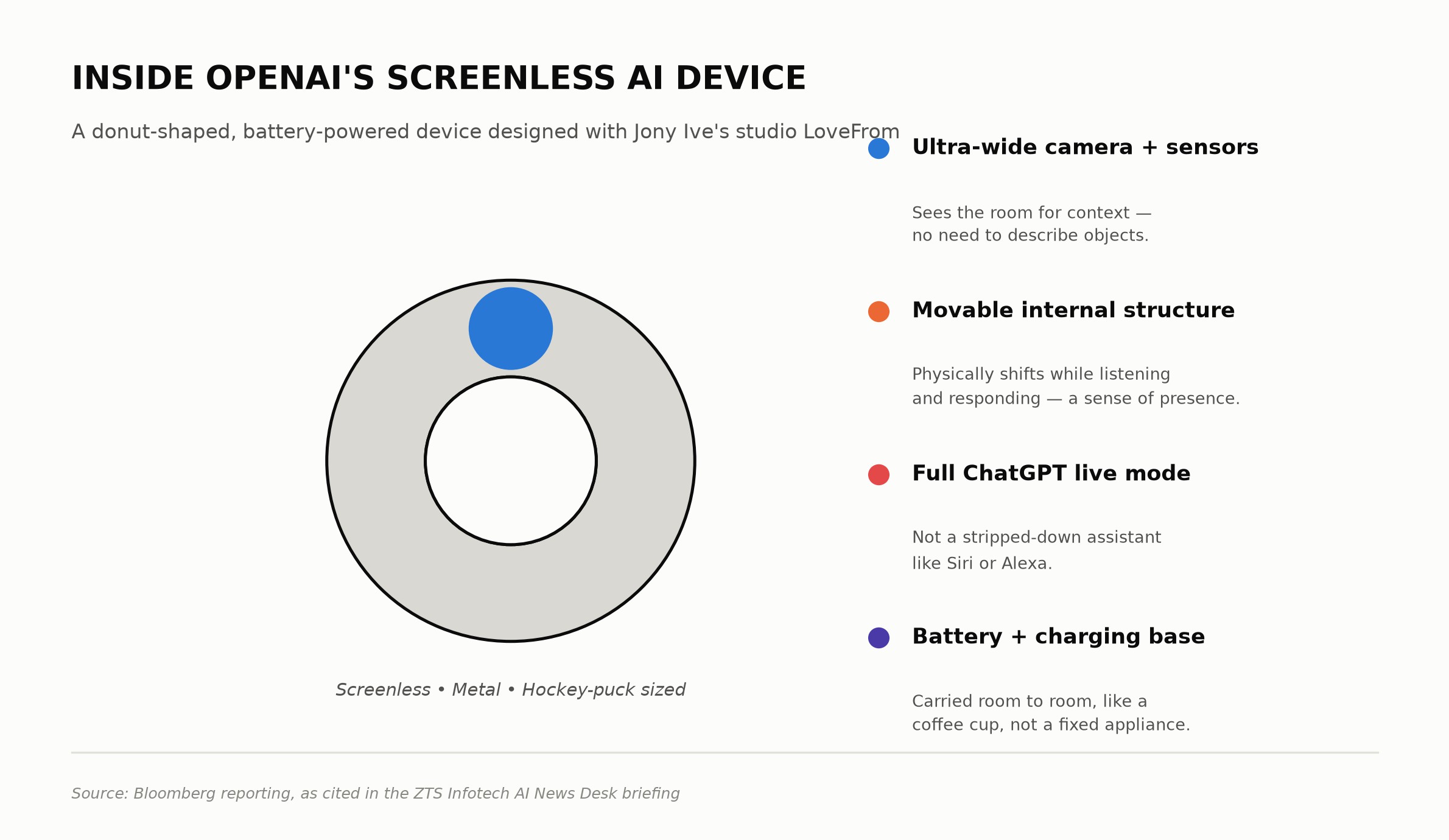
Picture a metal ring roughly the size of a hockey puck sitting on a kitchen counter. No screen, no buttons — just a smooth donut-shaped object with something moving quietly inside it whenever it's listening or thinking. According to Bloomberg's reporting this week, that object is real, and OpenAI is building it.
The device, developed in partnership with Jony Ive's design studio LoveFrom, is OpenAI's first serious step into physical hardware. For an industry still arguing about whether AI needs its own device category at all, the answer emerging from this project is unambiguous: OpenAI thinks the smartphone itself is the thing standing in the way.
A Deliberately Different Physical Object
What separates this device from an Amazon Echo or a Google Nest speaker isn't just the shape — it's the posture. It runs on battery with a dedicated charging base, meaning it moves from room to room the way a coffee cup does, not a fixed appliance bolted to a counter or a wall.
Inside the ring, a movable mechanical structure reportedly shifts physically as the AI listens, thinks, and responds. That detail matters more than it might first appear: rather than sitting inert like a smart speaker, the device is designed to convey a sense of presence, something closer to a companion object than a piece of consumer electronics.
It Can Actually See the Room
The practical layer is where the device starts to look genuinely different from what's already on the market. It reportedly carries an ultra-wide camera, microphones, and environmental sensors, giving it contextual awareness of the physical space around it.
In practice, that means a user could ask it when to take a specific pill bottle sitting on the counter, or when to turn off the stove, without describing what they're referring to — the device already sees it. Under the hood, it runs OpenAI's full ChatGPT live mode, not a pared-down assistant in the style of Siri or Alexa.
The Philosophy: No More Apps to Navigate
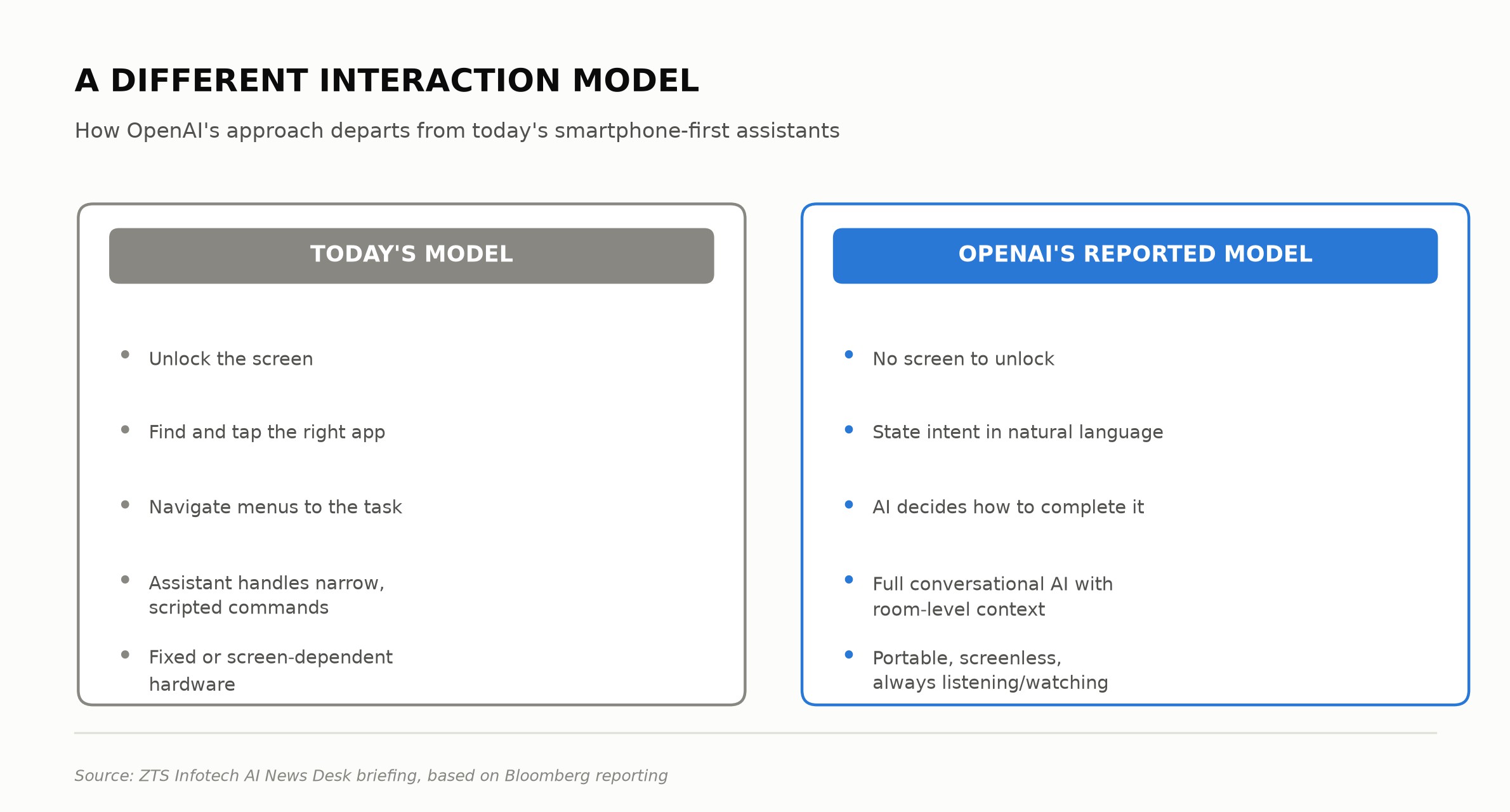
The stated ambition behind the project is arguably more consequential than the hardware itself. OpenAI reportedly wants to remove the entire smartphone interaction model — unlocking a screen, tapping an icon, navigating through an app — in favour of simply stating what you want and letting the AI decide how to do it.
That's a fundamentally different relationship between a person and a device than anything Apple, Amazon, or Google has shipped to date, each of which has largely built AI features on top of the existing app-and-screen paradigm rather than attempting to replace it outright.
Price, Timeline, and a Lawsuit Hanging Over the Project
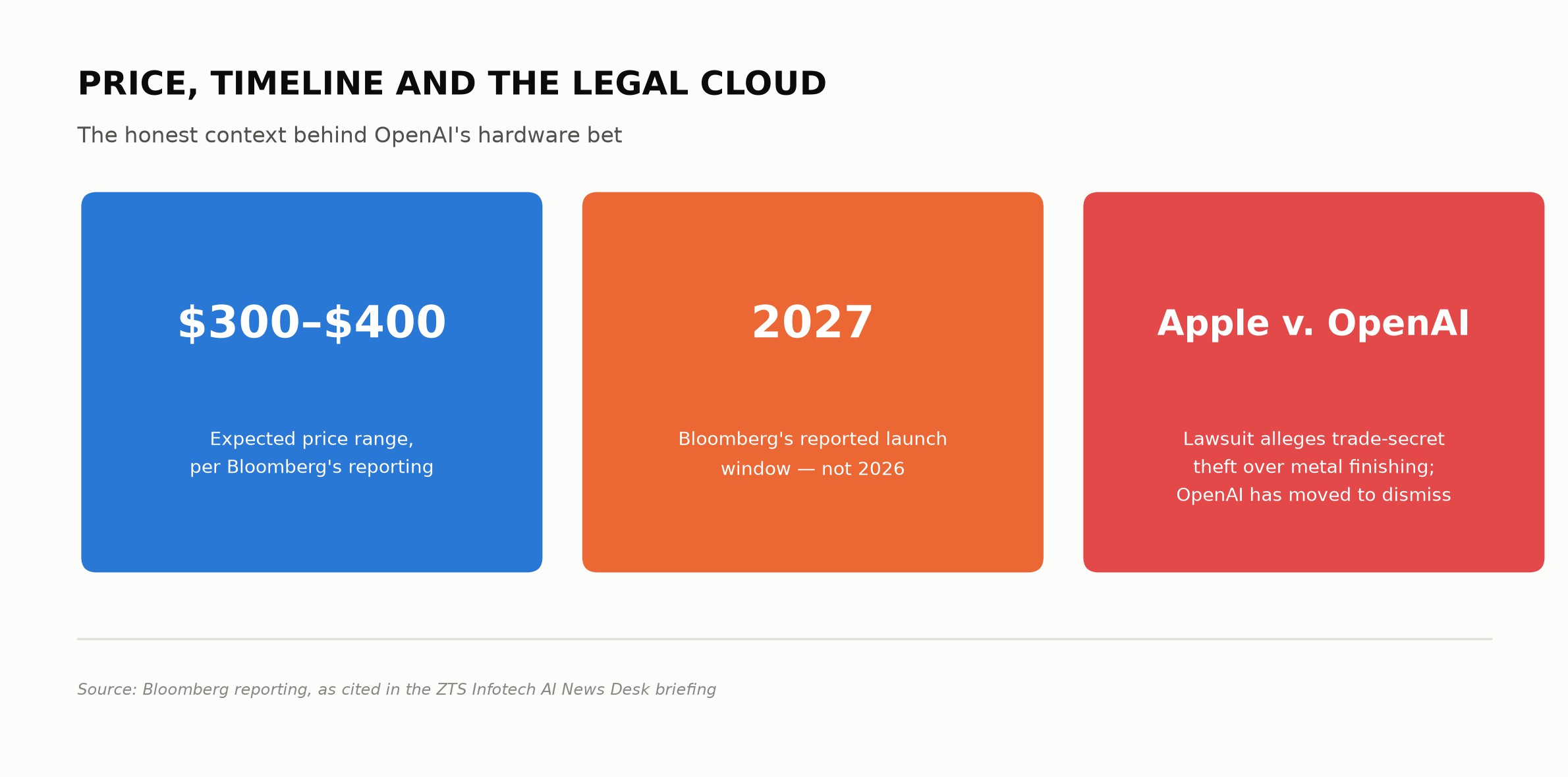
Bloomberg's reporting puts the expected price between $300 and $400, positioning it well above typical smart speakers and closer to premium consumer electronics. On timing, the same reporting points to a 2027 launch — later than some earlier speculation had suggested for 2026.
The project also sits under a genuine legal cloud. Apple is suing OpenAI, alleging the company poached talent and stole trade secrets related to a specific metal surface treatment technique used in the device's construction. OpenAI has filed to dismiss the suit, calling the claims baseless. Until that litigation resolves, it remains an open variable for a hardware program that is already operating on a multi-year timeline.
Expert Perspective
The most important signal in this reporting isn't the industrial design — it's the interaction model OpenAI is betting on. Voice assistants have existed for over a decade without meaningfully displacing the smartphone, largely because they were bolted onto narrow, scripted command sets. A device built around full conversational AI and ambient environmental awareness is a different proposition: it's less "smart speaker" and more an attempt to make the phone's app grid optional for a growing set of everyday tasks.
That's also why the Apple lawsuit deserves attention beyond its legal specifics. Apple's own reported ambitions in home AI hardware suggest this is shaping up as a genuine platform contest, not a niche gadget category — and incumbents rarely litigate over trade secrets unless they believe the underlying technology has real commercial stakes.
For business leaders, the relevant takeaway isn't whether to buy the device in 2027. It's that the interaction pattern it represents — intent stated in natural language, executed without a screen — is likely to show up first in customer-facing AI tools well before any hardware ships. Companies building voice interfaces, in-store kiosks, or ambient customer support should treat this as an early signal of where user expectations are heading, not a distant consumer curiosity.
Key Takeaways
- Bloomberg reports OpenAI, working with Jony Ive's design studio LoveFrom, is building a screenless, donut-shaped AI hardware device.
- The device is battery-powered with a charging base, designed to be carried room to room rather than fixed in place.
- An internal mechanical structure reportedly moves as the AI listens and responds, giving it a sense of presence.
- An ultra-wide camera, microphones, and environmental sensors give it contextual awareness of its surroundings, and it runs full ChatGPT live mode.
- The core philosophy is removing the smartphone's unlock-tap-navigate model in favour of stating intent directly.
- Expected price is $300-$400, with Bloomberg pointing to a 2027 launch rather than 2026.
- Apple is suing OpenAI over alleged trade-secret theft related to a metal finishing technique; OpenAI has moved to dismiss the claims.
Conclusion
OpenAI's screenless device is still years from shelves, and its final form, price, and even its release date could shift before then. What's already clear is the intent behind it: a serious attempt to make the smartphone's app-based interaction model optional, backed by one of the industry's most recognisable design studios. Business leaders building AI-driven customer experiences should watch this less as a
gadget launch and more as an early signal of where natural-language, screenless interaction is headed
— with or without a metal donut on the counter.
Related Reading on Our Sites
- AI Product Strategy Advisory Services
- Designing Conversational & Voice-First Interfaces
- What the ChatGPT Ecosystem Means for Enterprise AI
- AI Governance Consulting for Enterprises
- ZTS Infotech AI News Desk — Archive
External References
- Bloomberg — reporting on OpenAI's hardware device with LoveFrom
- Apple's litigation filings against OpenAI (trade secrets)
- OpenAI — official announcements and blog
-

Writen by Anirban Das