USA:
USA:  India: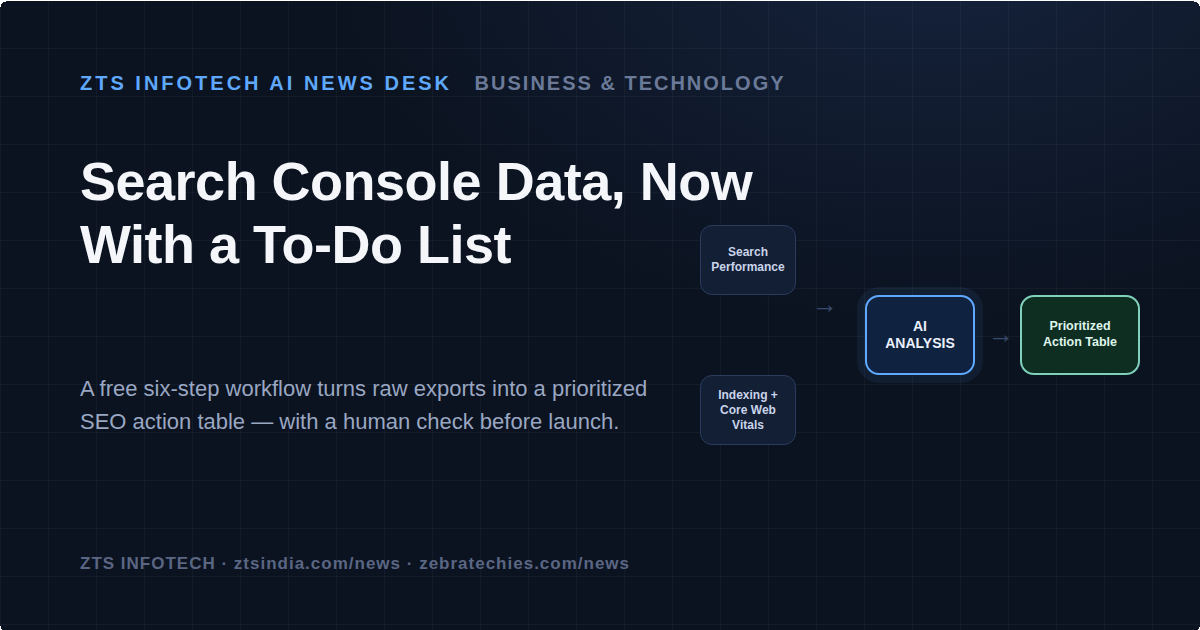
A Free Framework for Turning Search Console Into a To-Do List
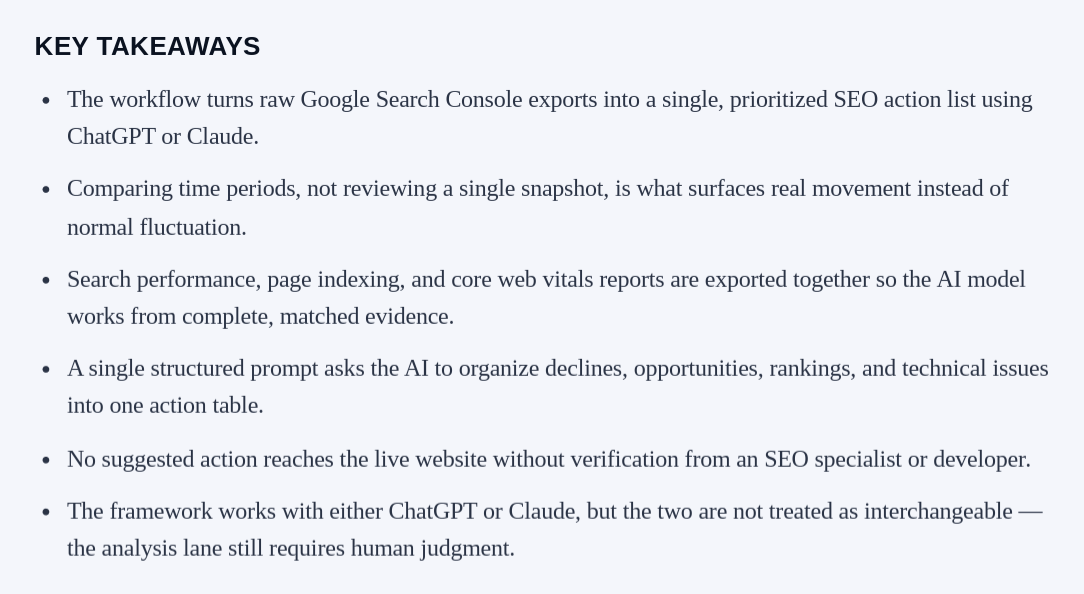
Most marketing teams already have the data they need to fix their website's search performance. It sits inside Google Search Console, exported occasionally, glanced at, and rarely turned into a prioritized list of what to actually do next. This week, ZTS Infotech's AI news desk laid out a six-step workflow that closes that gap using tools most teams already have access to: Search Console itself and a general-purpose AI model like ChatGPT or Claude.
The appeal is not novelty. Every piece of the workflow, exporting reports, comparing time periods, asking an AI model for a summary, already exists as a capability. What is new is the discipline of stringing them together into a repeatable process, and doing it in a way that keeps a human reviewer firmly in charge of anything that touches the live site. For marketing heads and digital transformation leads managing SEO across a growing set of pages without a growing headcount, that combination, structure plus a safety check, is the part worth paying attention to.
Step One and Two: Data, Then Comparison
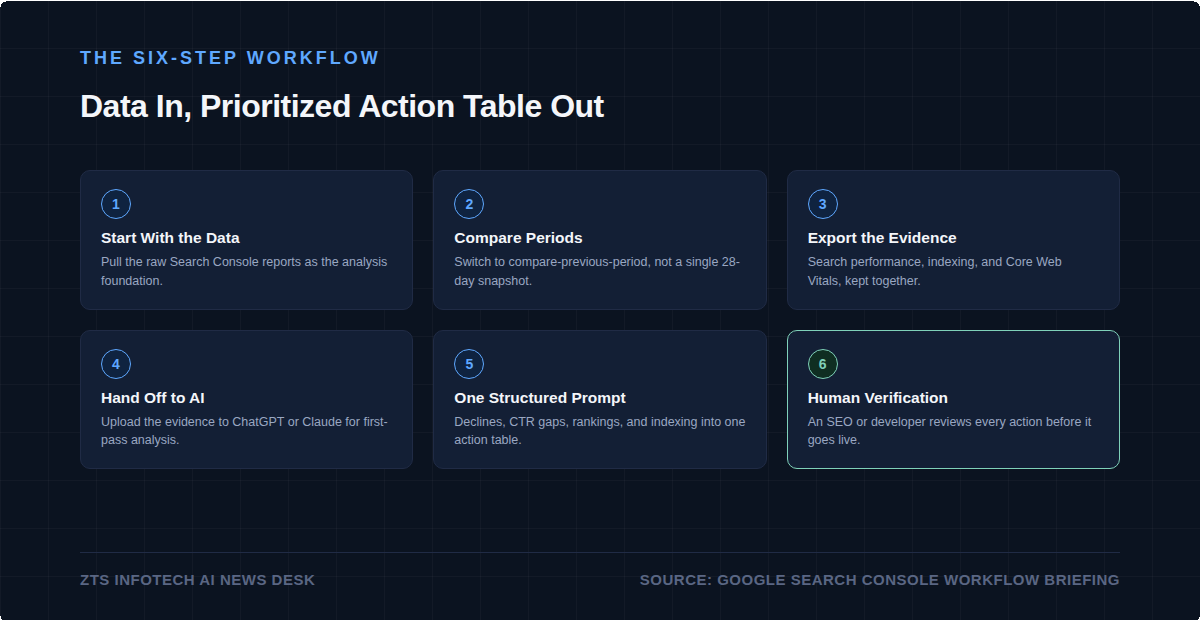
The workflow starts unglamorously, with the data itself, but the second step is where it earns its usefulness. Rather than reviewing a single 28-day snapshot, the framework calls for switching Search Console's date view to compare one period against the previous one. That single setting change is what turns a report into an analysis. A snapshot shows where a site stands; a comparison shows what actually moved, which pages gained or lost clicks, and where a decline is real rather than normal week-to-week noise.
Step Three and Four: Evidence, Then the AI Hand-Off
Next comes evidence gathering: exporting search performance, page indexing, and core web vitals reports, and keeping the files together so they can be handed off as a single, coherent input. That evidence then moves to an AI model, ChatGPT or Claude, uploaded directly for analysis. The framework is explicit that the two tools are not interchangeable black boxes producing identical output; whichever is used, the analysis lane is a means of processing volume, not a substitute for judgment about what the numbers mean.
Step Five: One Prompt, One Action Table
The fifth step is arguably the most practical part of the entire framework: a single, structured prompt that asks the AI to organize traffic declines, click-through opportunities, ranking movement, indexing issues, and performance problems into one prioritized action table. Instead of three separate reports requiring three separate reads, the output is one list, ranked by what matters most, ready to be assigned.
Step Six: The Check That Makes This Safe to Use
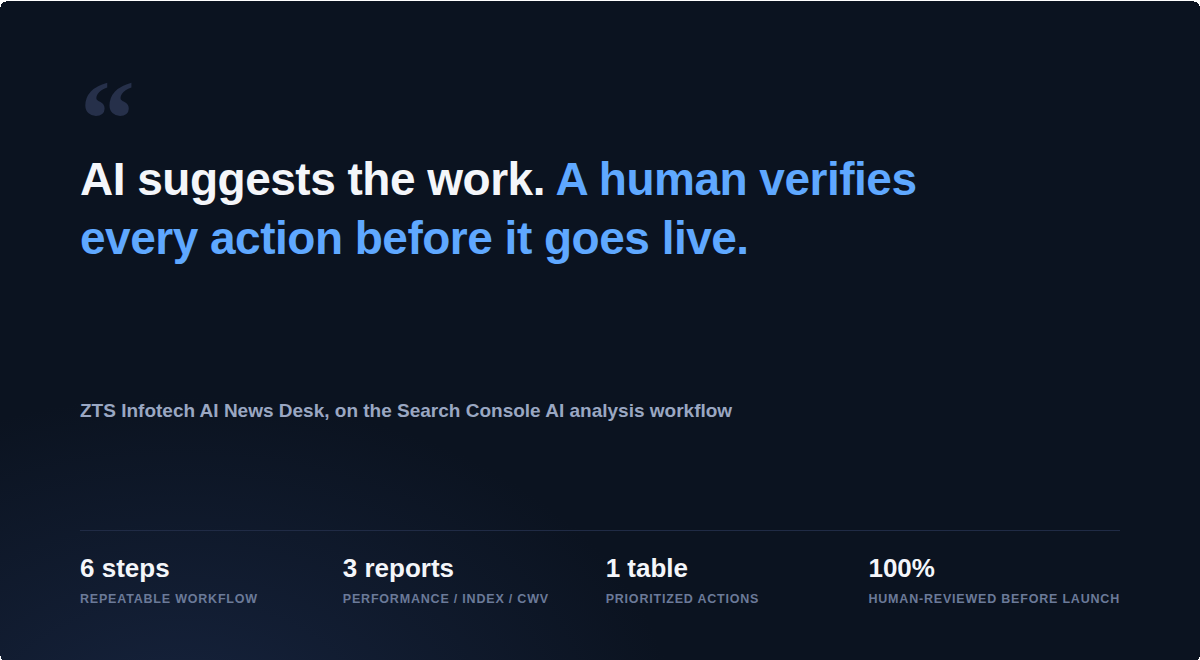
The final step is also the most important one for any business considering this approach: nothing goes live without human review. An SEO specialist or developer verifies every suggested action before it reaches the actual website. The AI's role is to suggest, compress, and prioritize; a person's role is to confirm the suggestion is correct before it becomes a change on a production site. That line, kept explicit rather than assumed, is what separates a useful shortcut from a liability.
Expert Perspective
What makes this workflow notable is not the AI model doing the summarizing. It is the discipline around it. Marketing and SEO teams have had access to large language models for well over a year now, and plenty of experimentation has happened informally, someone pasting a report into a chat window and asking for thoughts. What tends to be missing is structure: a consistent set of inputs, a consistent comparison method, and a consistent checkpoint before output becomes action. This framework is valuable less as a technical breakthrough and more as an operating procedure that a team can actually repeat every week without reinventing it each time.
For business leaders, the transferable lesson extends past SEO. The pattern here, structured data in, a single well-designed prompt, mandatory human verification before anything reaches production, is the same shape showing up across other AI-assisted business functions, from support ticket triage to financial reporting. Teams that formalize this pattern get the speed benefit of AI without inheriting the risk of unreviewed AI output touching customers, revenue, or in this case, a live website's search visibility.Expect more marketing and operations teams to build similarly structured, checklist-driven AI workflows rather than relying on ad hoc prompting, simply because the repeatable version is the one that survives staff turnover and scales past a single analyst's habits.
Looking Ahead
As more marketing teams adopt AI to handle the first pass of technical analysis, the workflows that last will likely look like this one: structured, comparison-based, and anchored by a mandatory human checkpoint before anything reaches customers or a live site. The AI shortens the distance between raw data and a prioritized to-do list; it does not remove the need for someone who understands SEO to sign off on the result. ZTS Infotech's AI news desk will keep tracking how teams operationalize AI-assisted reporting, and which checklist-style frameworks prove durable enough to survive daily use.
-

Writen by Anirban